
The Psychology of the Instagram Comment Section: Why Users Leave Feedback and How to Prompt Them
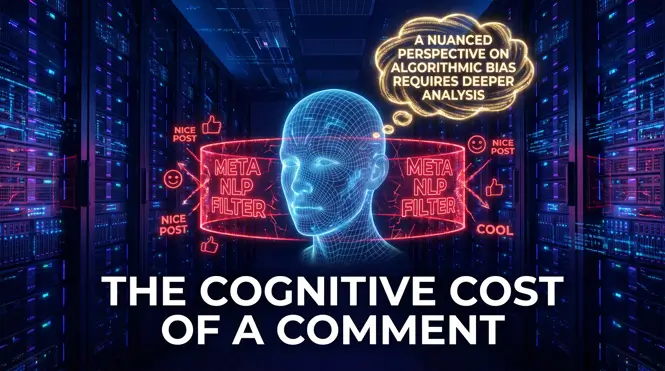
Likes are passive, but comments are active social currency. To scale organic distribution on Instagram, you must understand social identity, resolve the "empty restaurant" barrier with strategic comment seeding, and trigger Meta’s high-intent algorithm indicators.
We have all been fed the same comfortable lie by platform advocates: "Just focus on creating high-quality content, and the audience engagement will naturally follow." It sounds reassuring, but anyone managing accounts in 2026 knows it is patently false. You can craft the most visually stunning carousel or record a crisp, high-production Reel, only to watch it sit dormant in the feed with thousands of impressions, hundreds of passive likes, and a desert of zero comments.
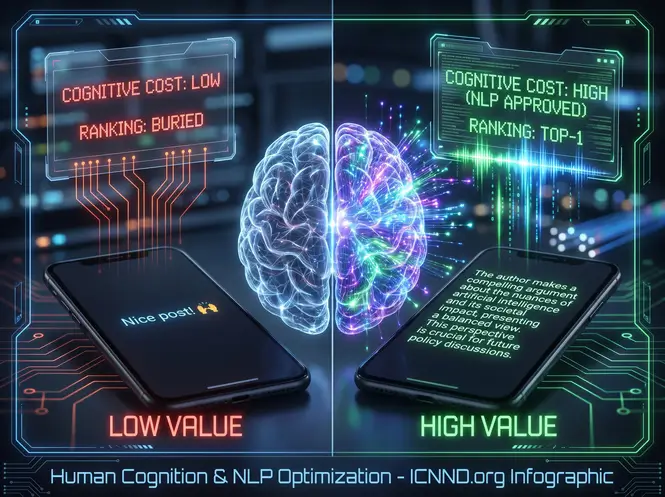
The paradox of modern Instagram growth lies in the vast cognitive gap between a double-tap and a written comment. The double-tap is incredibly cheap. It is an involuntary muscle reflex, a low-friction action that users execute while half-asleep. A comment, however, requires high cognitive investment. It forces the user to pause their scroll, process their internal thoughts, type out a coherent response, and expose their public profile to the potential judgment of total strangers.
Yet, the real battle for algorithmic distribution is won or lost in this high-friction territory. Users now spend more time reading nested comment threads and participating in sub-conversations than they do watching the actual media assets. The comment section is no longer an afterthought—it has evolved into a secondary, self-sustaining content ecosystem where communities are built and search-indexing signals are generated.
1. The Architecture of Action: Why We Type When We Could Just Tap
To systematically prompt comments, you must first dissect why a user decides to cross the chasm from passive observer to active participant. In social psychology, this behavioral shift is explained by Social Identity Theory. When someone types a comment on your post, they are rarely speaking directly to you. Instead, they are projecting an optimized version of their identity to your audience. They want to be seen as the funniest, the smartest, or the most empathetic voice in the room. Your content is simply the stage; their comment is the performance.
This dynamic has intensified with the rise of the nested sub-conversation. Instagram's modern interface actively rewards micro-debates within comments. Users find a strong "fear of missing out" (FOMO) not just from the post itself, but from missing the cultural sub-text happening inside the top-liked replies. Top-rated comments frequently gather more traffic, nested replies, and likes than the creator's actual caption. A user scrolling through a highly upvoted comment thread feels a psychological pull to chime in, correct a minor technical detail, or validate a point. This sub-ecosystem offers immediate social validation in the form of likes on their comment, stimulating the brain's dopamine pathways.
Another powerful driver is cognitive dissonance. When a post subtly challenges an industry standard or creates a minor, safe friction point, it triggers an urge to write. The human brain struggles to leave a perceived error uncorrected. The sweet spot is introducing constructive cognitive dissonance—taking a firm, contrarian stance on a common industry practice and showing why it fails under scrutiny.
2. The "Empty Restaurant" Phenomenon and the Physics of Social Proof
If you have ever walked down a busy street searching for a place to eat, you likely walked past a completely empty bistro in favor of the lively spot next door with a line out the door. This is basic social proof in action: humans look to others to determine correct social behavior. In digital spaces, this translates directly to what I call the "Threshold of Vulnerability."
Leaving the first comment on a post is a high-risk social act. It places the user on a blank stage with no cover. Most users will completely avoid empty comment sections because they do not want to be the sole voice in a silent room. To break through this initial psychological barrier, growth teams must utilize strategic seeding.
This hesitation isn't just anecdotal; it is deeply rooted in academic studies on Social Identity Theory, which show that group affiliation and platform design fundamentally dictate how users present themselves and engage online. Users naturally avoid high-risk social spaces where they might stand out awkwardly, gravitating instead toward pre-populated conversations where their participation feels validated by the crowd.

Avoid artificial, high-frequency comment spamming. Instagram's modern semantic filters easily detect identical syntax structures, newly created accounts, or instant post-to-comment timestamps. This lazy automation triggers negative signals that restrict reach.
Instead, seek authentic human copywriters or professional community assistants who use seasoned, aged accounts. You can check our recommended service here if you need support with this process. They must thoroughly read your post, reference specific context, and draft structured, 15+ word paragraphs that naturally prompt replies from other real users.
- ✔ Dwell Time Optimization: Real users spend more time on your post reading structured, detailed comments, which signals deep attention to the Reels and feed algorithms.
- ✔ SEO Keyword Integration: Meaningful, context-rich discussions naturally seed your primary LSI keywords, reinforcing your search relevance on Instagram without cluttering captions.
3. [Field Notes] From Crickets to Cult Following: A Strategic Pivot
Let me share a specific scenario from a recent audit I conducted for a B2B SaaS client. They were hitting impressive reach numbers—often breaking 50,000 impressions per Reel—but their comment depth was functionally zero. When we analyzed their content structure, the problem became glaringly obvious: their posts were simply too polished. They operated as a broadcaster, delivering closed-loop statements. A typical video would outline "The 3 Best Ways to Optimize Your Workflow," leaving absolutely no room for the audience to add value. They had effectively shut the door on the conversation before it even started.
We executed a hard pivot. Instead of posting definitive, bulletproof answers, we started introducing intentional knowledge gaps. We shifted the narrative framework from absolute statements to open-ended dilemmas. For example, a new post read: "We tested these 3 workflow methods, and the results completely contradict standard industry advice. What are we missing here?"
The result was immediate. By lowering the artificial polish and practically inviting the audience to correct us, the comment-to-impression ratio quadrupled within two weeks. People rushed in to offer their theories, point out variables we supposedly ignored, and debate with one another. Because these users spent an average of 45 seconds longer on the post while typing their replies, Instagram’s retention graph spiked, pushing the account’s overall baseline reach up by 38%.
4. The Fallacy of the "Engagement Question"
Walk into any entry-level social media marketing seminar, and you will hear the exact same advice: "Always end your caption with a question to drive engagement." You see it everywhere. "What do you guys think?" or "Drop a 🚀 if you agree!"
This is lazy, and for advanced audiences, it actively harms brand perception. Asking a generic question feels transactional. It signals desperation to the user, and worse, it triggers Instagram's Natural Language Processing (NLP) spam filters. Meta’s models are highly adept at identifying engagement bait. When an algorithm detects explicit pleading for interactions, it quietly devalues the resulting single-emoji replies, meaning those comments provide almost zero algorithmic lift.
Instead of explicitly begging for a comment, your content must demand it implicitly. We call this Implicit Prompting. You do not ask a direct question; you leave an unresolved tension, present a controversial (but brand-safe) stance, or include a visually arresting detail that users feel compelled to point out on their own volition.
5. Engineering Triggers: High-Friction vs. Low-Friction Mechanics
Prompting a high-friction action requires engineering specific psychological triggers directly into your media assets. If you rely solely on the caption, you have already lost, because fewer than 20% of users tap "Read more." The hook must exist natively within the video or image.
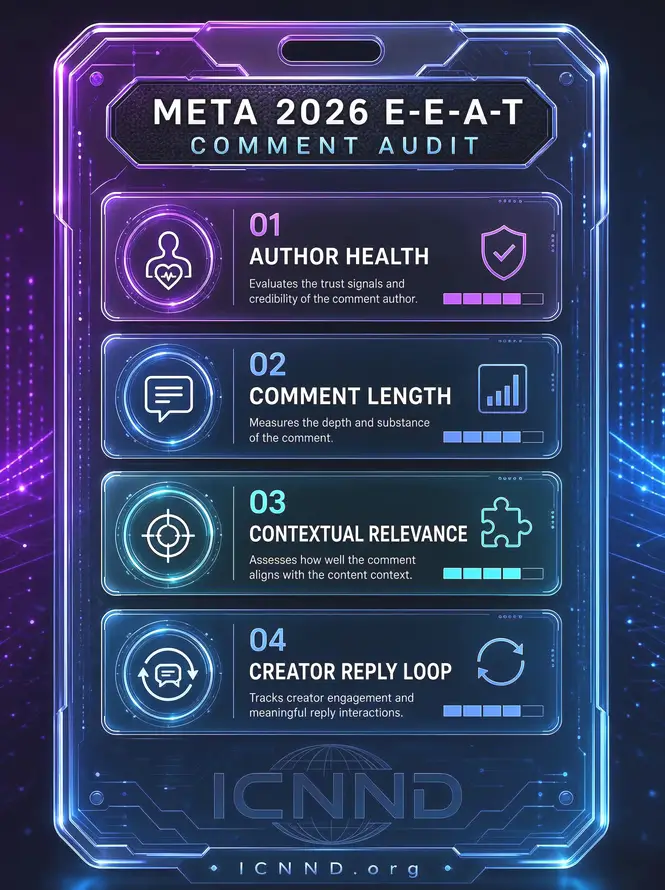
When utilizing these triggers, you are optimizing for a metric known as Lexical Depth. In 2026, Instagram's algorithms actively parse comments for semantic richness. A single 15-word debate thread discussing the specifics of your video is weighted exponentially higher than fifty repetitive "Great post!" comments left by casual scrollers.
Moving from Broadcaster to Moderator
Ultimately, comments are not a passive metric to be counted; they are a behavioral output that must be actively engineered. Transitioning your mindset from a broadcaster to a community moderator requires you to stop talking at your audience and start designing spaces for them to talk to each other.
Audit your recent content. Look closely at your last ten posts and ask yourself a blunt question: "Did I leave room for the audience to be smart, or did I do all the talking?" Furthermore, if you are launching a new account or campaign, consider how you are managing that critical initial traction. If you are struggling with the "empty restaurant" barrier, investigating avenues for sourcing real comments on Upwork to seed those first few high-quality, high-friction discussions might be the exact tactical lever you need to trigger organic algorithmic reach. Architect the environment, set the conversational standard early, and the organic community will follow.
Understanding the cognitive cost of comment perception is just the first step. If you want to apply these concepts in practice and learn exactly how the Instagram algorithm ranks comments for maximum reach, explore our detailed analysis of the 2026 Instagram comment ranking algorithm.
💡 Frequently Asked Questions
Everything you need to know about the psychology of Instagram comments in 2026.
What is the "empty restaurant" phenomenon on Instagram? +
Why are comments more valuable than likes in 2026? +
What is "Implicit Prompting" in Instagram captions? +
How does Lexical Depth affect Instagram comment ranking? +

Written by Elena
View Full Profile →Senior Social Media Strategist & Algorithm Analyst
Elena was inspired to write this piece after auditing a massive B2B account that struggled with zero comments despite high reach. She realized traditional SMM advice was failing, leading her to reverse-engineer the psychology behind social proof and cognitive friction in Meta's 2026 algorithms.