
Instagram Reels Engagement Rate Benchmarks: 2026 Industry Report
Hey there! If you've been on Instagram lately, you've probably noticed the whole platform feels like a different app than it did a couple of years ago. It's just an endless feed of short, punchy videos.
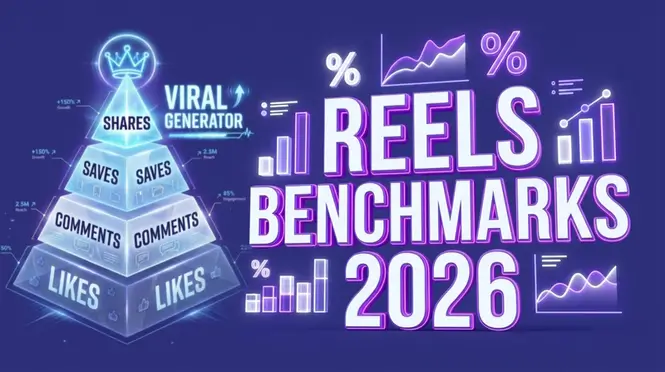
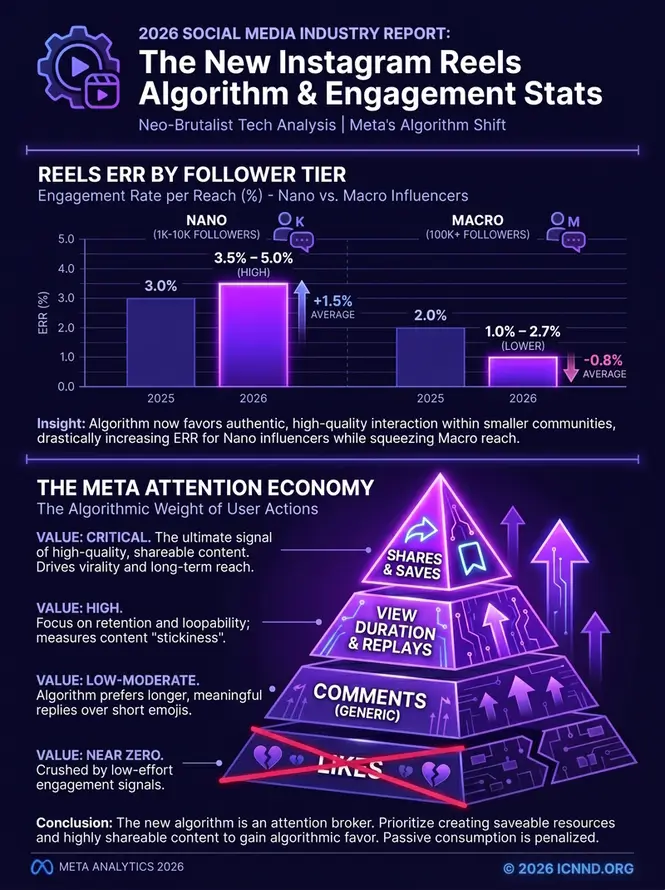
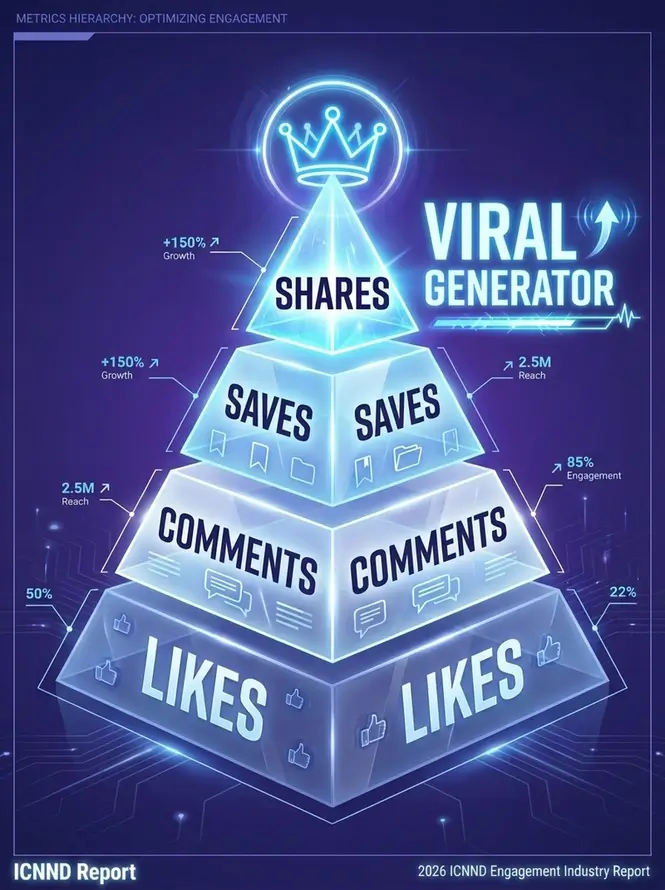
Evaluating Reels based on follower counts yields inaccurate data. The standardized metric for 2026 is **Engagement Rate by Reach (ERR)**. Baseline benchmarks dictate that healthy ERR ranges from 3.5%–5.0% for nano-accounts, dipping down to 1.0%–2.7% for macro-profiles. As Meta shifts distribution logic, simple likes are heavily discounted, leaving **Shares and Saves** as the primary algorithmic triggers that actively force short-form video content onto the global Explore page.
Let's look at the hard truth: Instagram Reels now eat up more than 50% of the total time people spend on the platform, a trend heavily documented in the recent HubSpot State of Social Media Report. Think about your own habits for a second. How many times have you opened the app to check out a friend's photo, only to look up an hour later realizing you've fallen down a rabbit hole of cooking hacks, dog and cats videos, and random business tips? Yeah, we've all been there.
But if you're on the creator or business side of things, this shift is honestly kind of scary.
Seen your organic reach tank recently? You're not imagining it, and you're definitely not alone. Organic reach is collapsing across the board. Whatever worked in 2023 or 2024 just doesn't fly anymore. Back then, you could throw up a decent video, slap on a few popular hashtags, and watch the views roll in. Not anymore. The algorithm has gotten a lot less forgiving. Instagram has basically ditched the old "economy of likes" and moved to an "economy of attention and shares."
If people don't stick around to watch your video all the way through, and if they're not sending it to their friends, Instagram just stops pushing it. Simple as that.
The real problem? Most marketers are working blind. Google "good" Instagram engagement rate and you'll get a mess of contradictory answers. One big software company says 1%, another blog insists it's 5%. Why such a wild gap? Because everyone's methodology is a mess—lumping regular photo posts together with Reels, or leaning on outdated formulas that make no sense for a video-first platform.
Honestly, we got sick of the guesswork. That's the whole reason this report exists. We dug through thousands of active accounts across dozens of industries to put together a clean, consistent picture of what a genuinely good Instagram Reels engagement rate looks like right now. No fluff, no robotic corporate-speak—just real numbers you can use to actually judge your content and plan ahead.
For this study, we pulled global data from both commercial brands and independent creators, focusing only on active accounts posting at least two Reels a week. Let's dig into the numbers so you can see exactly where you stand.
The Engagement Math: Stop Using the Wrong Formulas
Before we look at the numbers, we need to agree on how to count them. If you are still calculating your engagement rate the old-fashioned way, you are lying to yourself—or worse, making decisions based on bad data.
Let's talk about the three ways people calculate engagement, and why only one of them really matters for Reels.
Formula 1: Engagement Rate by Followers (The Old Way)
This is the formula that most social media tools use by default because it is easy to track. It looks like this:
Here is the issue: Reels don't care about your follower count. The whole point of the Reels tab is to push your content to a "cold" audience—people who have never heard of you. If a video goes viral and gets 500,000 views, but you only have 5,000 followers, your engagement rate using this formula will look artificially massive (like 300%). Conversely, if you have 100,000 followers but Instagram only shows your video to 2,000 people because the hook was weak, your ER looks like zero. It's an unstable metric.
Formula 2: Engagement Rate by Reach (The Honest Way)
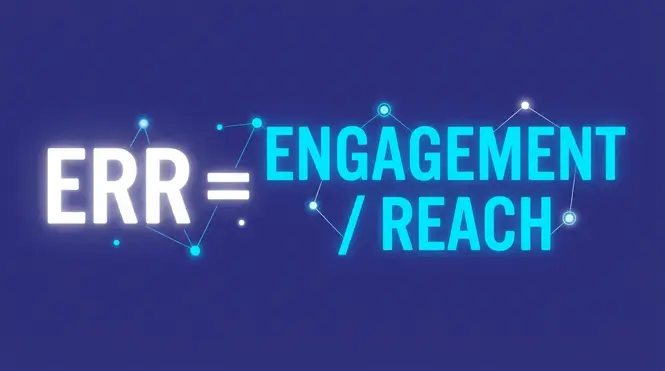
If you want to know how good your video actually is, you need to use Engagement Rate by Reach (ERR). This is our preferred metric for this report:
Think about it this way: out of the unique human beings who actually saw your video on their screens, how many of them cared enough to stop, double-tap, leave a comment, save it for later, or send it to a friend? This formula judges the quality of the content, completely independent of your account size. If your ERR is high, the content is great. Period.
Formula 3: Engagement Rate by Views (The Micro-Action Metric)
This is a fantastic internal metric for checking how well your call-to-action (CTA) worked:
This tells you the exact percentage of viewers who took action. If you have a video with 10,000 views and 1,000 saves, you have a 10% view-to-save conversion. That is an incredibly powerful signal to the algorithm.
For the rest of this report, whenever I mention "Engagement Rate," assume we are talking about Engagement Rate by Reach (ERR) unless specified otherwise. It's the only way to keep the comparison fair.
Global Benchmarks: How Account Size Changes Everything
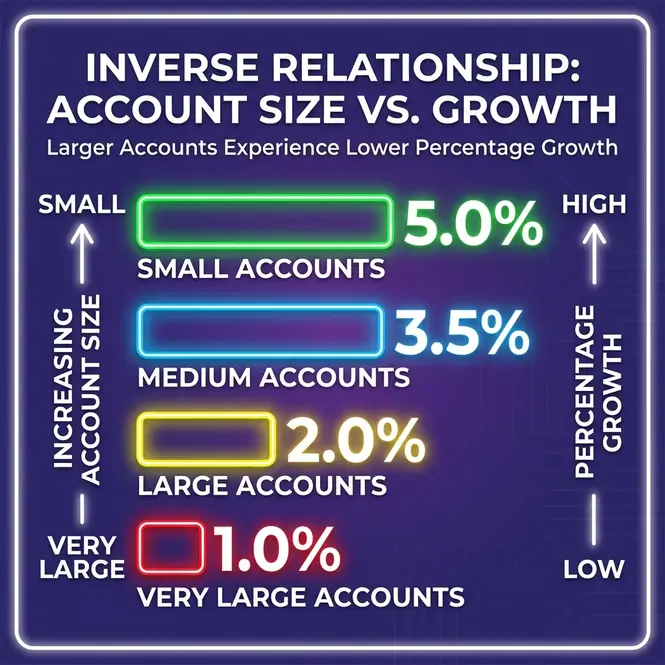
Here is a universal truth we found across every single account we analyzed: the bigger you get, the harder it is to keep people engaged. This aligns with the long-term methodology seen in the Rival IQ Social Media Industry Benchmark Report, showing an inverse relationship between follower size and active engagement.
Why? Because when you have 2,000 followers, they are usually your most loyal fans, friends, and early adopters. They love you. When you have 200,000 followers, you have a massive mix of casual observers, old accounts that don't log in anymore, and people who followed you for one specific video three years ago and now skip past your content.
Let's look at the benchmarks across four distinct follower tiers.
1. Nano-Accounts (1K – 10K Followers)
If you are a small account, celebrate it! You have a superpower that big brands spend millions trying to replicate: hyper-loyalty. Nano-accounts consistently pull the highest engagement rates on the platform. Your audience is tightly knit, they read your captions, and they reply to your stories. If your Reels are hitting below 3.5% in this stage, your hooks are likely too broad. You need to niche down and speak directly to your core community.
2. Micro-Accounts (10K – 100K Followers)
This is the valley of growth. You've crossed the threshold of just talking to your friends, and now you are building a real commercial audience. At this stage, your engagement rate naturally begins to dip. You are pulling in more cold traffic from the Reels feed, and those people are much harder to please. Success here depends on consistency. You need to establish a predictable content format so that new viewers immediately understand what value they get by following you.
3. Medium & Macro-Accounts (100K – 1M Followers)
Once you hit six figures, you start accumulating what I call "ghost followers." These are accounts that followed you during a viral spike but aren't actively engaged with your day-to-day topics. A normal, healthy benchmark here hovers around 2%. If you are maintaining anything above 2.5%, you are absolutely crushing it. It means your content is highly shareable and repeatedly breaks out of your follower bubble.
4. Mega-Accounts (1M+ Followers)
Here is where things get fascinating. Mega-accounts split into two completely different camps. On one side, you have big corporate brands whose engagement rates drop to a dismal 0.4% to 1.0% because their content feels sterile and ad-like. On the other side, you have top-tier creators who maintain an incredible 3.9% engagement rate.
Why do individual creators win here? Because personal connection scales better than logos. Even with millions of followers, a creator who talks directly to the camera like a friend can maintain massive engagement, while a corporate product video gets scrolled past instantly.
Industry Showdown: Which Niches Win the Engagement War?
Not all niches are created equal. If you are trying to get people excited about business accounting software, you cannot expect the same raw engagement numbers as someone showing off a luxury hotel room in Bali. Data tracked by the Hootsuite Instagram Analytics Guide confirms that retail and B2B sectors naturally face lower initial ERR due to distinct consumer relationship patterns.
Let's look at the benchmarks across three performance categories based on our industry data.
The High-Performers (Niches that inherently trigger engagement)
Travel and entertainment perform brilliantly because they are highly visual and emotionally stimulating. People see a gorgeous beach or a funny sketch, and their immediate reaction is to hit the "Share" button to send it to their partner or friend group.
But look at Education and Nonprofits—they are the dark horses here! Why do they score so high? One word: Saves. When you publish a video titled "3 Free Tools to Design Websites in 60 Seconds," people don't just watch it; they save it so they can reference it later. That save action counts heavily toward your engagement metrics.
The Middle Ground (Steady, competitive niches)
Food content gets tons of casual views and likes, but it rarely generates deep conversations in the comments unless it's a controversial recipe. Finance and tech operate on the opposite end: they get fewer casual likes, but they pull massive volumes of highly specific comments (people asking questions) and saves. If you are in finance, your goal shouldn't be mass virality; it should be maximizing the utility of the information so viewers feel compelled to bookmark it.
The Low-Engagement, High-Revenue Niches
If you sell clothes, makeup, or skincare, looking at a 0.8% engagement rate can feel deeply depressing. But don't panic! This is completely normal for the retail sector. The fashion and beauty markets are incredibly saturated. People use Instagram like an interactive catalog. They scroll through, look at an outfit, and they might buy it—but they rarely stop to drop a comment or share it with five friends unless it is radically unique.
For these niches, a low engagement rate doesn't mean your business is failing; it just means your audience is consuming your content passively. Focus on your direct message (DM) funnels and click-through rates rather than chasing public likes.
The Anatomy of a Reels View: Decoding the Algorithm's Weight System
Let's look under the hood. How does the Instagram algorithm actually weigh different types of engagement?
Think of the algorithm like a point system. Not every tap on the screen is worth the same value. If someone gives you a quick like, that's great, but it's the weakest possible signal. It takes zero effort to double-tap a screen while walking down the street.
Here is how the hierarchy of engagement signals looks right now:
/ \
/ Shares \ <-- The ultimate viral engine
/------------\
/ Saves \ <-- Proves long-term utility
/--------------\
/ Comments \ <-- Shows community interaction
/----------------\
/ Likes \ <-- The basic entry-level signal
/------------------\
[ LOW VALUE ]
1. Likes: The Base Level
Likes are a vanity metric. They look pretty on your dashboard, but they don't push your video out to a broader audience anymore. A high like count with zero comments or shares tells the algorithm that your video is pleasing but uninspiring.
2. Comments: The Conversation Trigger
Comments show that your video made someone think. But here is the catch: the algorithm tracks the length and quality of the comment. If fifty people just drop a single fire emoji, it doesn't carry as much weight as ten people typing out full sentences. The algorithm wants to see debate, conversation, and community. If you can get people arguing (politely!) or sharing their own stories in your comments, Instagram will reward you with massive reach.
While saves and shares drive explosive virality, the comment section remains Meta's primary laboratory for measuring real community depth. However, not all comments are weighted equally by the algorithm in 2026. If you want to understand exactly how the system separates high-value conversations from generic emoji spam, read our comprehensive breakdown on how the Instagram algorithm ranks comments. Mastering this system allows creators to actively trigger the 4-word engagement threshold and boost overall video distribution.
If you can get people arguing (politely!) or sharing their own stories in your comments, Instagram will reward you with massive reach. For those looking to kickstart this algorithmic flywheel with high-quality, non-bot engagement, using a trusted provider like ICNND can safely trigger the initial social proof needed to attract organic discussions.
While high engagement numbers are a great starting point, understanding the user psychology behind them is crucial. To dive deeper into the human side of engagement and learn why certain interactions drive higher algorithmic value, read our recent analysis on the cognitive cost of a comment.
3. Saves: The Value Proof
A save is an explicit vote of confidence. It tells the platform: "This video is so useful that I want to store it in my personal archive to look at again." High save rates tell the algorithm that your content has staying power, extending the shelf-life of your Reel from a few hours to several days or even weeks.
4. Shares: The Holy Grail of Virality
If you want a million views, you need Shares. When a user clicks the paper airplane icon and sends your video directly to a friend's DM or posts it to their own Story, the algorithm loses its mind. A share is the ultimate form of social proof. It says: "This content is so good that I am willing to risk my personal reputation to show it to someone else." If your shares-per-view ratio is high, your video will fly onto the Explore page.
The Retention Factor
Behind all of these engagement metrics lies the foundation of watch time. If you don't survive the "First 4 Seconds Rule," nothing else matters. The algorithm plots a retention curve for your video. If 80% of people swipe away before the 3-second mark, your video dies in the cradle. You must have a strong visual or textual hook to keep them locked in long enough to perform one of the high-value engagements listed above.
Rules vs. Everything Else: The Strategy Battle
Should you stop posting photos altogether? Is the carousel dead? Not quite, but the landscape has fundamentally shifted. Let's do a quick reality check on how Reels compare to other formats on the grid.
Reels vs. Carousels (The Slide Deck Challenge)
Carousels (posts with multiple swipeable photos or graphics) are actually the closest competitor to Reels when it comes to engagement metrics. In fact, in some niches, carousels pull a slightly higher static engagement rate (around 0.55% vs 0.50% for Reels) because if a user scrolls past a carousel without engaging, Instagram will often show them the post a second time later in the day, featuring the second image in the slide deck. This gives you two chances to grab their attention.
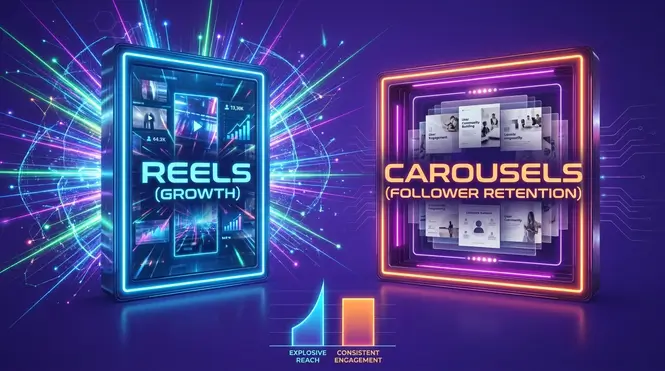
However, carousels are primarily shown to your existing followers. Reels, on the other hand, are built for growth. If your goal is to acquire new audience segments who have never heard of you, a Reel will out-perform a carousel ten times over in raw reach volume.
Reels vs. Single Images (The Hard Truth)
Let's be honest: the single static photo is on life support for business accounts. Over the past year, the average engagement rate for single images dropped by another 17%. Unless you are an incredibly famous celebrity whose casual mirror selfie can command headlines, posting a single photo of your product or team is an uphill battle. The algorithm simply does not give static photos the same distribution velocity as video content.
If you are going to post an image, turn it into a carousel, or better yet, convert that static insight into a short, 7-second looping Reel with a text overlay and trending audio background.
The Verdict: Your Action Plan
We've covered a lot of ground, so let's distill all this data into three practical rules you can use to transform your Instagram strategy today.
Instagram is an attention game. Now that you know the rules and the real benchmarks, it's time to go out there, experiment, adjust your formats, and make the algorithm work for you.
- ✔ High Retention: Keep users locked into the content structure past the critical 4-second benchmark.
- ✔ Actionable Triggers: Drive organic saves and direct message handoffs safely within platform parameters.
💡 Frequently Asked Questions
Key 2026 Instagram Reels engagement benchmarks you should know.
What is a good engagement rate for Instagram Reels? +
How do you calculate Reels engagement rate accurately? +
Which engagement signal matters most to the Reels algorithm? +
Why do large Instagram accounts have lower engagement rates? +
Do Reels get more reach than Carousels? +

Written by Elena
View Full Profile →Senior Social Media Strategist & Algorithm Analyst
Elena is a Senior Social Media Analyst specializing in Meta's video distribution algorithms. Having tracked thousands of creator and brand profiles, she uncovers the real mechanics behind attention retention and engagement metrics. Her data-driven insights help creators outsmart algorithmic updates and build sustainable organic reach.